Research lines

Please, click on each title to learn more.
Superconductors, Vortex Matter, and applications
Superconductors are materials that can transport electrical current with no dissipation at low-enough temperatures. This makes them applicable for energy transmission, storage, and various technological devices, particularly in the case of high-Tc superconductors. The discovery of other families of compounds, including the iron-based pnictides and chalcogenides, has sustained the momentum in this field and on hopes of finding novel families of materials with even higher critical temperatures and hitherto unexplored applications.
Our lab has been investigating the electronic, thermodynamic, and magnetic properties of superconductors for over 60 years and was among the first in Latin America to observe resistance drops in high-Tc superconductors. Since then, we have been extensively studying the properties of conventional and high-Tc superconductors, as well as the vortex matter that nucleates in type-II superconductors when a magnetic field is applied. Our research focuses primarily on the study of single crystals and thin films which are produced in-house, but we also collaborate with other groups that provide us with samples. The present activities carried out in our group include the study of diverse topics, such as:
- Electronic properties of the superconducting and normal state in Fe-based superconductors: We aim to understand the microscopic mechanisms leading to the emergent electronic phenomena observed in bulk samples.
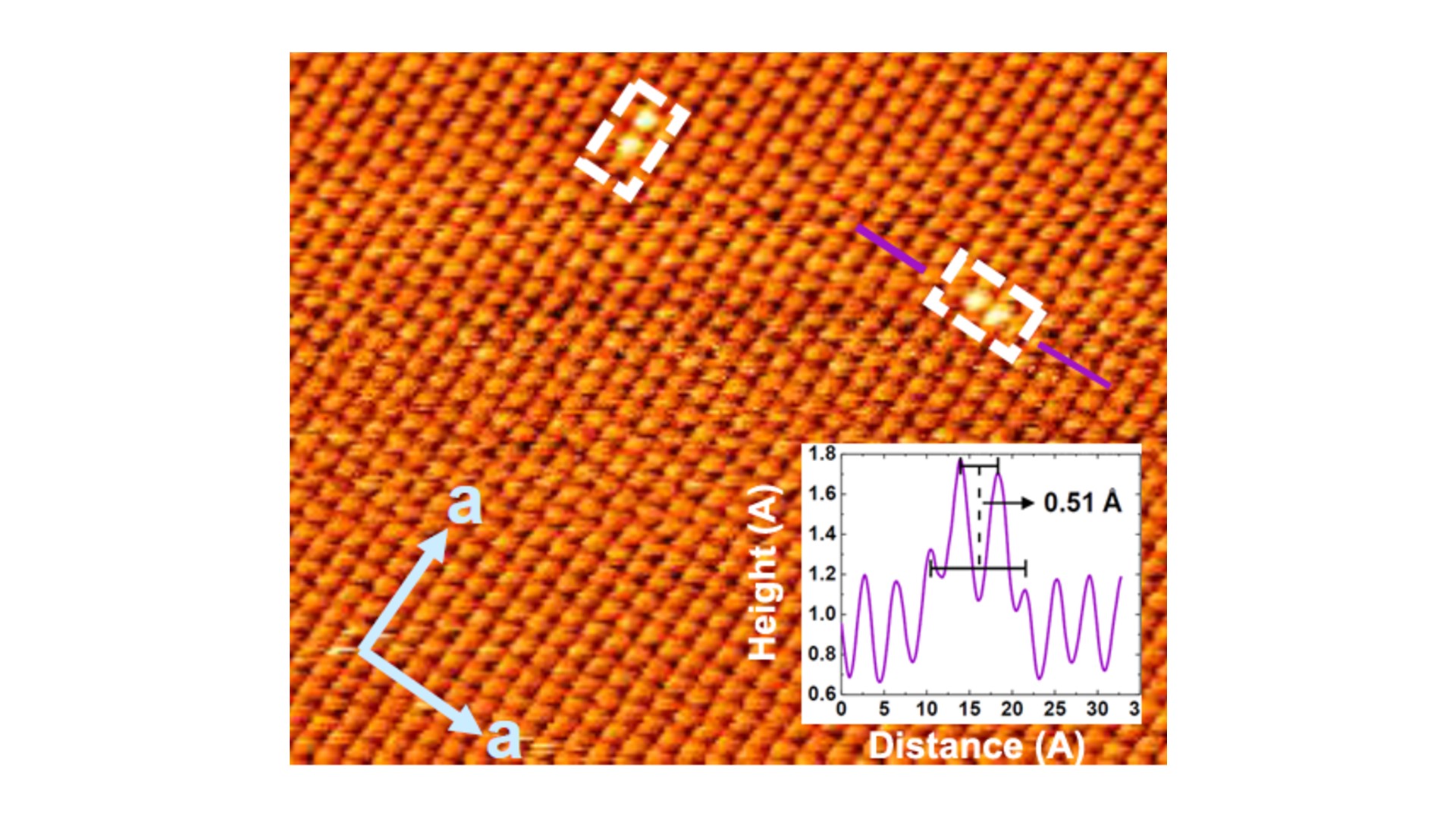
- Local electronic and magnetic properties of superconducting materials: We apply several techniques to unveil the impact of atomic defects in the local and bulk electronic and magnetic properties of superconductors.
- Structural properties of vortex matter nucleated in type-II superconductors: We use vortex matter as a playground of soft-condensed matter to study different structural phases and their phase transitions, particularly the nucleation of hyperuniform structures in host media with different types of disorder.
- Superconducting thin films and heterostructures for cryogenic radiation detectors: We focus on particular superconducting nanowire single-photon detectors and Josephson junctions. The key parameters under study include critical temperature, resistivity, upper critical fields, and vortex dynamics. We explore how geometrical confinement and interfacial engineering can be leveraged to optimize the functionality of devices.
- Devices of two-dimensional superconducting materials produced by cleaving: We have successfully produced thin flakes of MoSe₂, PtBi₂, and FeSe and we are studying their application for superconducting devices
People: M.L. Amigó, A. Cruz García, Y. Fasano, J. Guimpel, N. Haberkorn, G. Mogensen, G. Nieva, J. Puig, J. Zapata.



Semimetals with non-trivial topology
Semimetals possess the capacity to conduct electricity; however, their density of states at the Fermi level is considerably lower in comparison to conventional metals. Bismuth and graphite are among the most well-known classical semimetals, both exhibiting very low charge carrier densities. In recent years, considerable attention has been directed towards so-called topological semimetals. These materials exhibit symmetry-protected metallic surface states.
This means that, even when chemically or physically passivated, the surface states remain unaffected due to intrinsic symmetries or topological constraints. Such semimetals frequently manifest noteworthy macroscopic properties, including extreme magnetoresistance or even superconductivity. In recent years, our research group has focused on the study of semimetals, including PtBi2, WTe2, HfTe5, and related materials such as PdBi2.
People: M. L. Amigó, V. F. Correa, Y. Fasano, N. Haberkorn, P. Pedrazzini, J. Puig, J. Zabala.


Rare earth based intermetallics
Intermetallic compounds containing rare earth or actinides display a variety of phenomena, ranging from conventional magnetism to more complex behaviors such as heavy-fermion superconductivity. At sufficiently low temperatures, these phenomena can be tuned by selecting appropriate control parameters for the system under consideration, such as doping, strong magnetic fields or applied pressures.
Throughout the years, we have used this rich playground to investigate intermediate valence, quantum criticality, and unconventional superconductors, mostly cerium and ytterbium-based compounds. Currently, our interest lies in the study of: a) the complex magnetism of Eu systems like EuPdSn2 and 115-compounds like TbCoIn5, b) pressure effects on simpler systems such as gadolinium, and c) interpreting very low temperature heat capacity data of rare earth systems that could serve for magnetic cooling.
People: M. L. Amigó, V. F. Correa, G. Nieva, P. Pedrazzini, J. Sereni.

Bulk and nanostructured samples
Clean single crystals are essential for studying the intrinsic physical properties of materials. In our laboratory, we produce large bulk single crystals of high-temperature superconductors, metal chalcogenides, and pnictides. These high-quality samples are used in the investigation of electrical and thermal transport, as well as elastic and magnetic properties of superconductors and other materials. Our single crystal growth facilities include a mirror furnace for the traveling solvent floating zone technique, a 1700°C furnace for the Bridgman technique, and several other tubular furnaces for melt growth and vapor phase transport.
The research conducted within our group also focuses on the development and characterization of thin films and heterostructures for basic research and applications. We use sputtering and evaporation-growth techniques along with optical and electronic lithography to produce our samples and structures. This process allows for the integration of diverse materials, including superconducting nitrides with ferromagnetic and ferroelectric materials that tune their properties.
The quest for novel phenomena in clean low-dimensional materials, particularly those just a few monolayers thick, has led us to explore exfoliation techniques in transition metal dichalcogenides, monochalcogenides, pnictides and cuprates. Exfoliation, transfer, and protective coating of these flakes are critical first steps for enabling research on this emerging class of 2D materials. A notable challenge in studying the physical properties of these materials arises from the instability of few-monolayer samples under ambient conditions.
People: M. L. Amigó, V. F. Correa, J. Guimpel, N. Haberkorn, G. Mogensen, G. Nieva, P. Pedrazzini, J. Zabala, J. Zapata.

Minerals
Naturally occurring crystals can exhibit formidable size and shape, which is often unattainable in laboratory-grown counterparts. This provides a unique opportunity to study the extensive properties of rocks. Magnetism is a prevalent phenomenon in minerals. The interplay between magnetic and lattice degrees of freedom, commonly referred to as magnetoelastic coupling or magnetostriction, can become significant at cryogenic temperatures.
In our group we focus on the study of thermal and magnetoelastic properties of carbonate rocks, particularly MnCO3 (rhodochrosite) and FeCO3 (siderite). Recently, we discovered that rhodochrosite presents a uniaxial phonon-driven thermal expansion, in conjunction with substantial three-dimensional magnetostrictive effects.
People: V. F. Correa, N. Haberkorn, P. Pedrazzini.
