
State-of-the-art National Technology for Health, Science and Industry
Table of content Leer en español
At CNEA, we are designing and building the RA-10, Argentine Multipurpose Reactor, which will have a strategic impact on healthcare, science, technology, and industry. This project is located at the Ezeiza Atomic Center (Province of Buenos Aires) and more than 80% of it is performed by local technology companies and related services providers.

The facility will ensure national self-sufficiency in medical radioisotopes and will enable exports covering up to 20% of global demand. It will also produce 80 tons of doped silicon ingots, representing 40% of the current global market. In this way, RA-10 will consolidate capabilities for cutting-edge technological developments in nuclear and conventional industries, opening up new horizons for science, basic and applied research based on the application of advanced neutron techniques.
In parallel with its construction, which began in 2016, CNEAmoved forward with the training of the operations staff and the development of future users to ensure the full utilization of the facility.
Objectives
Medical radioisotopes
It will address increasing demand, specifically for molybdenum-99, ensuring a steady domestic and regional supply of radiopharmaceuticals while covering 20% of the world market.
Silicon doping for power electronics
It will produce silicon doped by neutron transmutation, a high-quality raw material for the development of advanced electronic applications.
Nuclear fuel qualification
It will provide facilities for conducting tests to evaluate, validate, and qualify new nuclear fuels and materials, while also offering new research opportunities in the field of nuclear fuels.
Neutron techniques for science and industry
Together with the Argentine Neutron Beams Laboratory, it will offer instruments for the application of neutron techniques for research and development in Materials Science, Biology, Biochemistry and others.
RA-10 Features
The RA-10 Argentine Multipurpose Reactor represents one of the largest investments of the National Government in Science, Technology and Innovation and will become a regional center of radioisotope production and applied and basic research.
Civil works
- Location: Ezeiza Atomic Center
- Site area: 3.85 Ha
- Floor area: 7,632m2
- Total built-up area: 17.723,52 m2 (from -8,8 m to + 26,5 m)
The facility is composed of four buildings: the Reactor Building, the Auxiliary Building, the Neutron Guides Building and the Services Building.
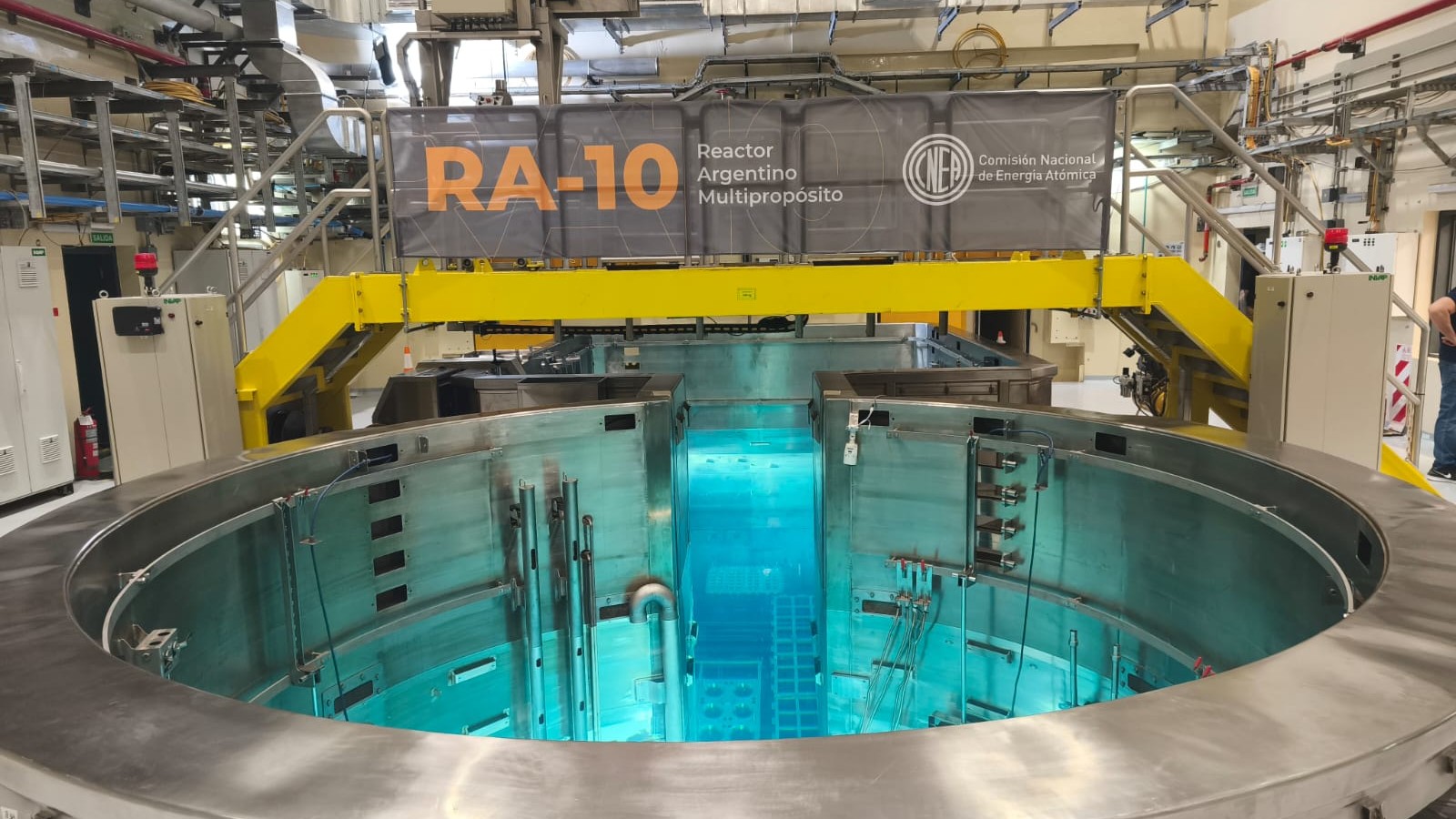
Multipurpose research reactor
- Power: 30MW
- Operating cycle: 29.5 continuous days
- Reactor Type: Open pool
- Fuel: Low-enrichment uranium, (MTR), Uranium Silicide
- Coolant & Moderator: Light water
- Reflector: Heavy water
- Core Cooling: Upward flow direction
- Two diverse and independent shutdown systems
- Molybdenum-99 production > 2,000 Ci/Week
Project milestones
The RA-10 Project began in 2010 with the objective of designing, building, and commissioning the RA-10 Argentine Multipurpose Reactor. The design phase involved over one million man-hours and generated more than 10,000 technical documents.
Currently, the project has reached an overall cumulative progress of 85%. Civil works were completed in early 2024, and procurement and assembly tasks are ongoing. The reactor’s commissioning phase is scheduled to begin in September 2026.
2014
- Construction License obtained, granted by the Nuclear Regulatory Authority.
2016
-
Start of the training and licensing stage for professionals and technicians who will make up the future reactor operating staff.
-
The Provincial Agency for Sustainable Development (OPDS) granted the Certificate of Environmental Suitability.
- In March, civil works begun at the Ezeiza Atomic Center.
2018
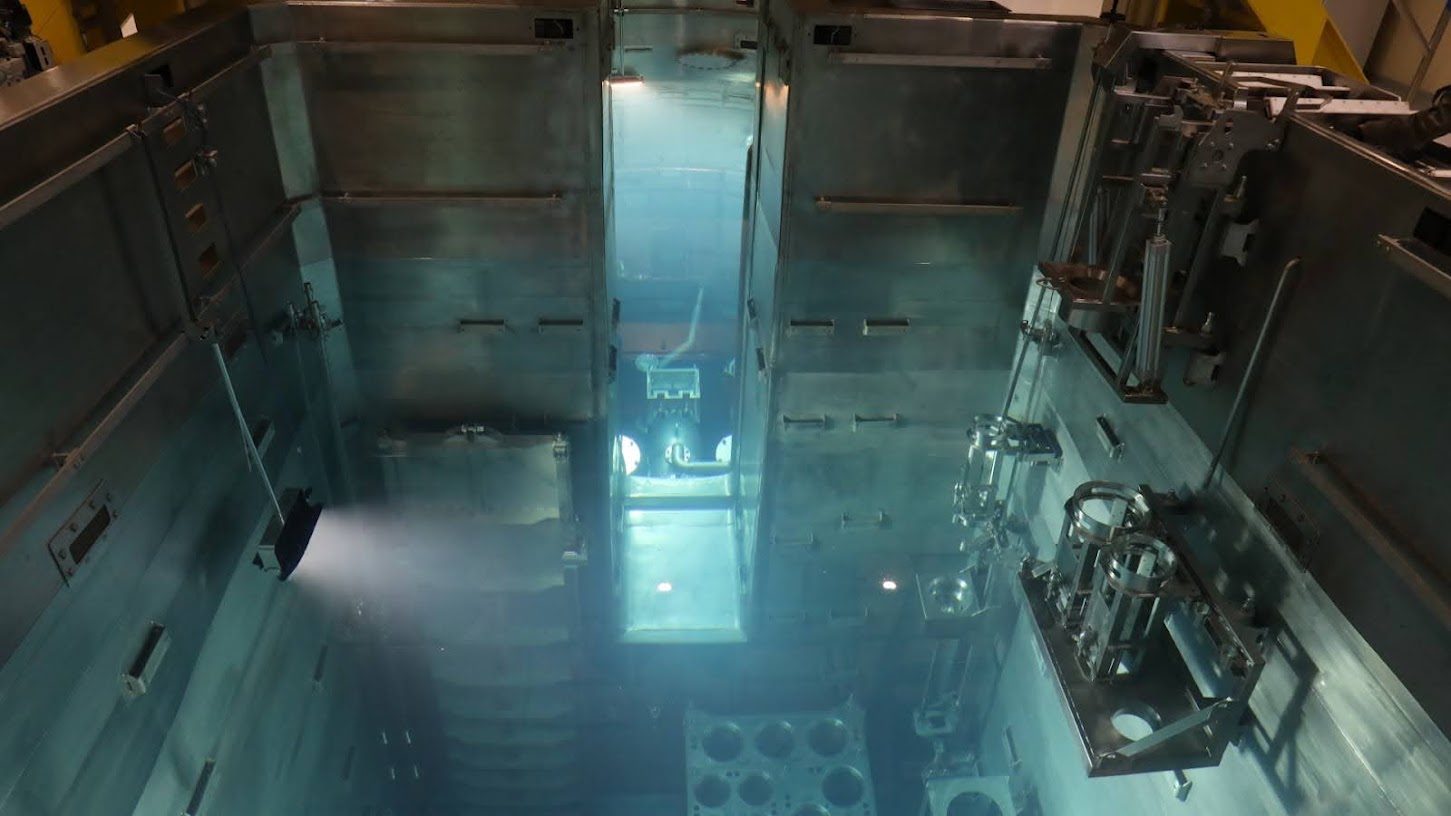
- Reactor Pool Assembly. This milestone kicked off the supply and installation of the major components of the facility.
2019
-
February: Assembly of the Primary Cooling System Decay Tank.
-
July: Assembly of the Services Pool.
2020
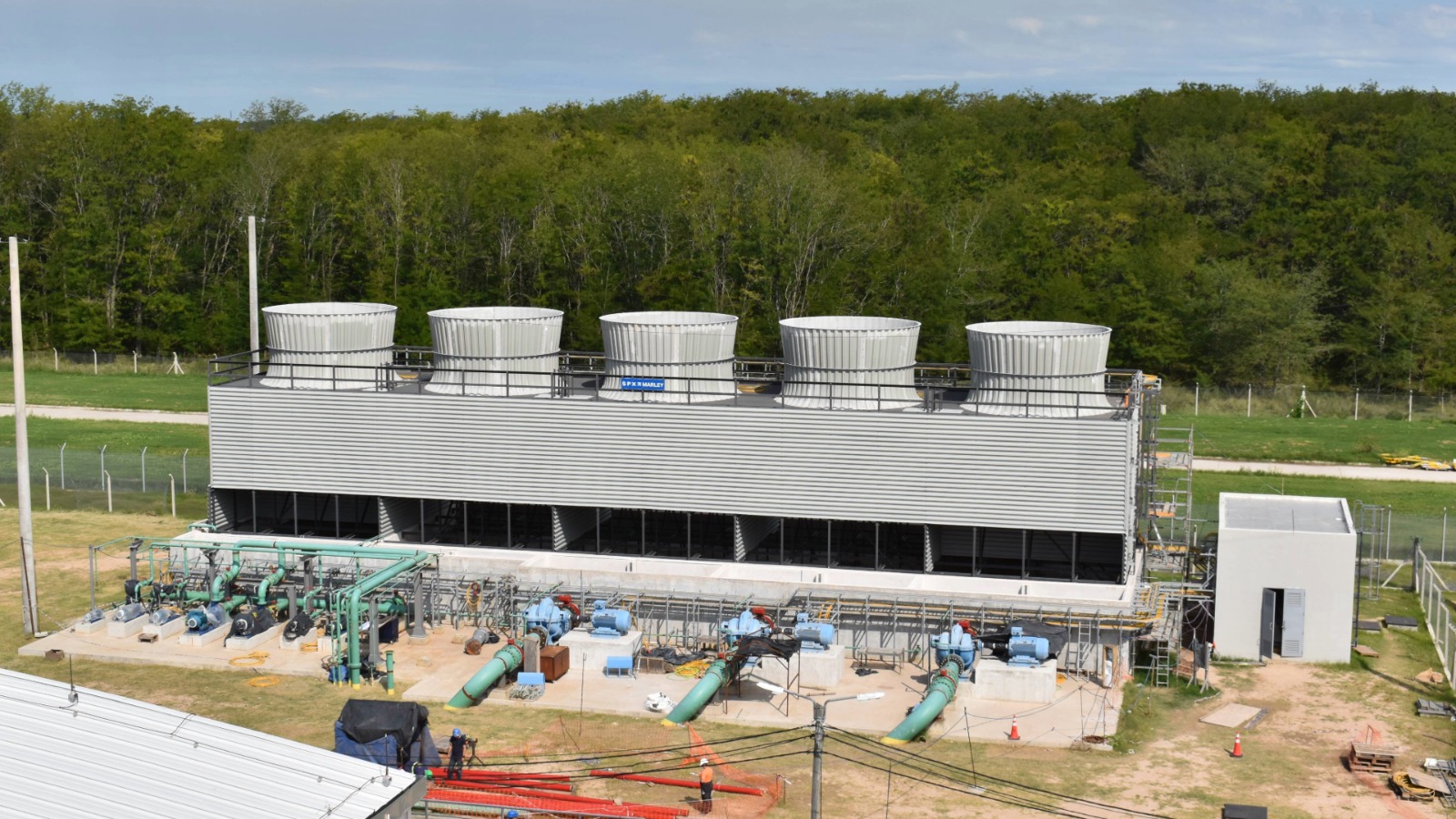
- October: Assembly of the Primary Cooling Circuit Pumps and Heat Exchangers.
2021/2022
- The work continued to progress under strict safety protocols by COVID-19.
2023
- Inauguration of the new electrical substation that extends the electric supply for the Ezeiza Atomic Center.
2024
- The operators obtained their individual licenses and are currently undergoing training to obtain the specific licenses required to perform reactor commissioning activities.
- February: the construction of the Reflector Tank at INVAP's workshops in San Carlos de Bariloche was completed.
- March: Completion of civil works for the four buildings.
- August: Reflector Tank Assembly.
News in Spanish
2025
- The project has reached 85% overall progress. Essential reactor building facilities—including structures, systems, and critical equipment—have been completed, leaving the necessary systems operational to proceed toward functional testing. The Pre-operational Testing (POT) phase for systems began in May 2025.
- During the same period, CNEA finalized the supply of dummy fuel elements for the hydraulic characterization of the primary cooling system, as well as the fuel for the reactor’s initial core ahead of its commissioning. Furthermore, progress continued on the fabrication of the ASTOR and ANDES instruments for the Argentine Neutron Beam Laboratory (LAHN).
2026
- Startup of the pumps of the RA-10 Reactor primary cooling system.
- Initiation of 19 pre-commissioning tests, including the operation of the main pumps of the secondary system.
RA-10 in pictures



Last update: March 2026