Presidencia de la Nación

ATENEA: Artemis II Secondary Payload

ATENEA is a 12U CubeSat developed in Argentina that will fly as a secondary payload on NASA’s Artemis II mission, marking humanity’s return to the Moon for the first time in more than 50 years since the last Apollo mission.

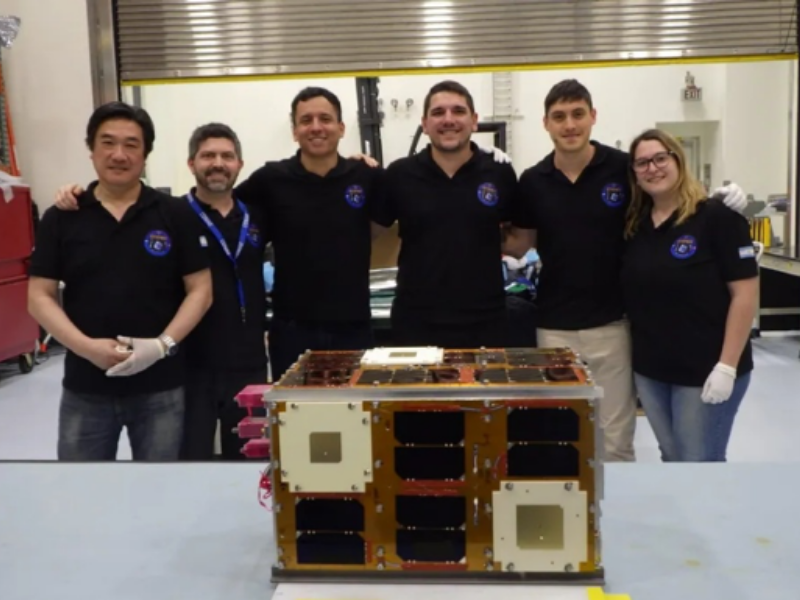
Atenea Equipo Argentino

The satellite is the result of a joint effort led by CONAE, the Argentine Space Agency, in collaboration with several academic and scientific institutions, including the National University of La Plata (UNLP), National University of San Martín (UNSAM), the Faculty of Engineering of the University of Buenos Aires (FIUBA), the Argentine Institute of Radio Astronomy (IAR), the National Atomic Energy Commission (CNEA), and the company VENG S.A.

ATENEA is designed as a technological demonstration, aimed at testing innovative payloads and space systems. The project strengthens Argentina’s national capabilities in satellite design, integration, deployment, and operations, while also serving as a platform for training young engineers and students. ATENEA reflects Argentina’s commitment to space exploration, technological innovation, and international cooperation.

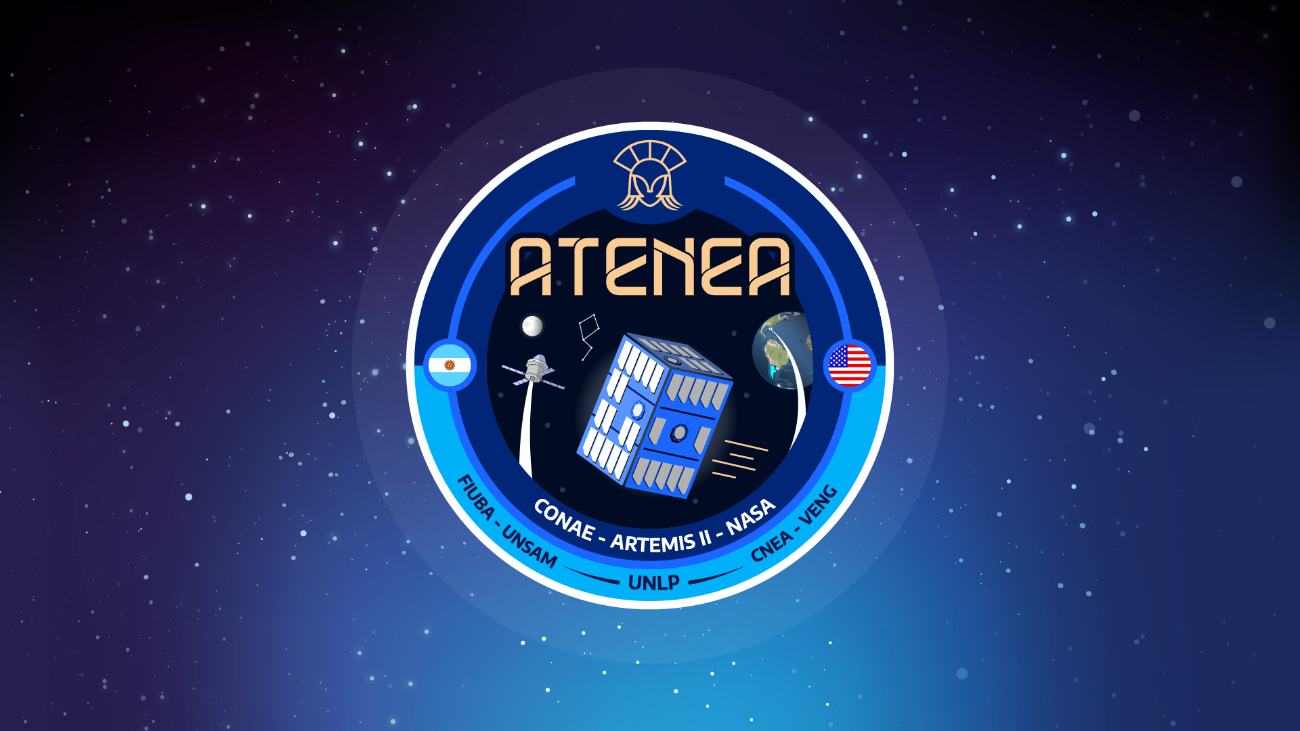
The insignia shows the SLS launch trajectory, the deployment of the ATENEA satellite, and the Orion spacecraft on its journey to the Moon. The Southern Cross, featured in the design, represents the Southern Hemisphere and Argentina, the country behind the project, while the Earth in the background highlights the mission’s connection to our planet and the international collaboration that makes this exploration possible.
Why ATENEA?

In Greek mythology, ATENEA (Athena in English) is the goddess of wisdom, strategic warfare, and justice. Her name embodies the scientific knowledge and meticulous planning that allowed this 12U CubeSat to fly with Artemis II.

While NASA’s mother mission is named Artemis (in honour of the goddess of the Moon), Argentina sends Atenea. In mythology, both are strong and independent goddesses, representing a symbolic alliance as they venture together into deep space.

Unlike other deities who represent raw power, Athena is the patron of resourceful intellect. This highlights the ability of experts and students working together to create advanced technology with optimized resources under low-cost frameworks.

Mission Objectives

  • Design of processes and multidisciplinary team organization based on agile methodologies for the rapid execution of low-cost satellite missions. As the project sponsor, CONAE assumes the challenge and responsibility of this role.
  • Validation of the Assembly, Integration, and Test (AIT) process for CubeSat platforms intended for technological demonstrations, increasing their Technology Readiness Level (TRL) and enabling their use in more complex missions. CONAE, with workmanship and facility operators from VENG S.A., leads this activity in collaboration with all participating institutions.
  • Survey of radiation doses from low Earth orbit to deep-space environments under different radiation-shielding levels, supporting designs based on Commercial Off-the-Shelf (COTS) components. This experiment is developed jointly by UNSAM and FIUBA.
  • Testing of Silicon Photomultipliers (SiPMs), optoelectronic devices with high photon detection efficiency, for single-photon measurements in the visible spectrum with a high dynamic range. A technological demonstration led by UNSAM.
  • Survey of Global Positioning System (GPS) data above the GPS constellation to optimize transfer-orbit maneuver operations for GEO orbits and cislunar orbits. Using a GPS receiver developed by UNLP.
  • Validation of long-range communication links for future deep-space exploration programs, using a communication system developed by UNLP for a previous mission and adapted for this scenario.
  • Contribute to fostering international collaboration efforts led by CONAE, especially with NASA and concerning the Artemis program.

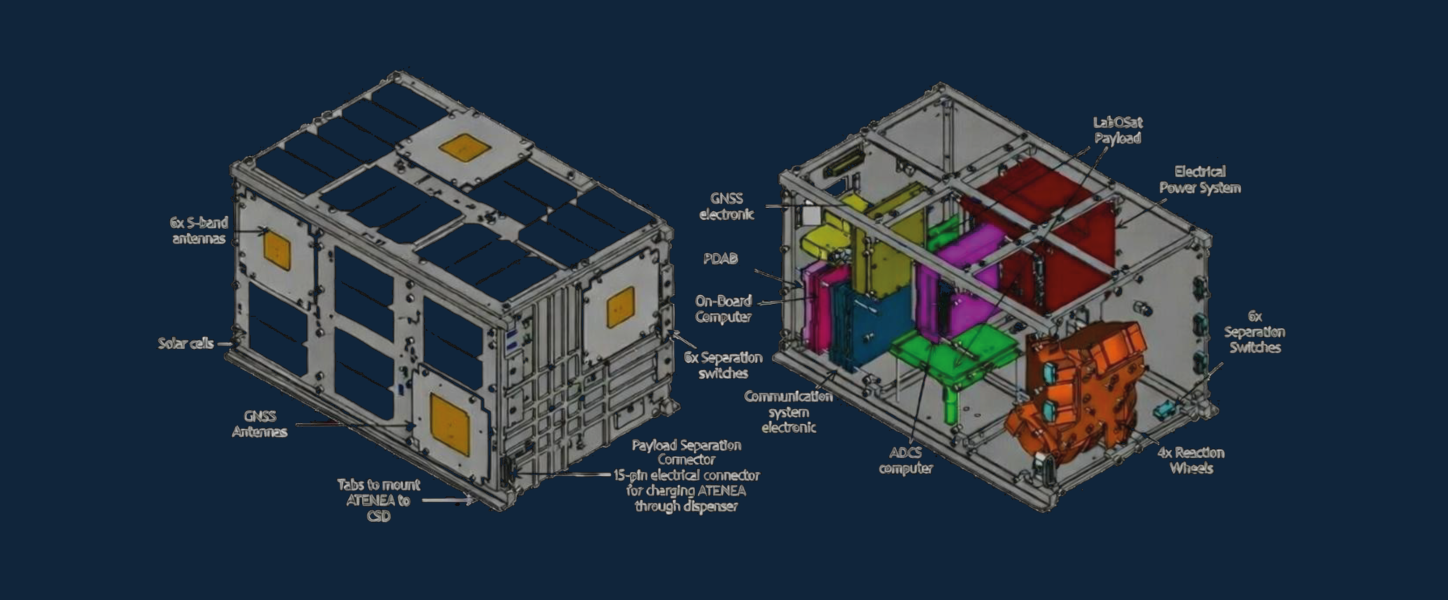
Payload Hardware Overview

ATENEA's flight system includes the following subsystems:

Render ATENEA

  • Structure: designed by UNLP
    It provides structural support and radiation shielding for all satellite subsystems.

  • On-Board Computer (OBC): developed by UNLP
    It runs the flight software, controlling the overall satellite and handling commands and data.

  • Communications System: developed by UNLP – antennas tested by IAR
    It enables S-band communications for receiving telecommands and sending housekeeping telemetry and science payload data to ground stations.

  • Attitude Determination and Control System (ADCS): COTS
    It provides attitude determination and 3-axis control for stable sun pointing.

  • Power System: COTS
    It manages power storage, distribution, and battery charging from solar panels in-flight.

  • Solar Panels: developed by CNEA
    They convert sunlight into electrical power for the power system.

  • External Charger (EECC): developed by FIUBA
    It was intended for battery charging during on-ground operations, with no sun illumination.

  • GNSS Receiver: developed by UNLP
    It is intended to work in non-nominal scenarios, above the GNSS constellation.

  • LabOSat: provided by UNSAM
    LabOSat (an acronym for Laboratory-on-a-Satellite) is a miniature laboratory with its own computer and sensing boards used for testing technology in space. In ATENEA, it will be testing a Silicon Photomultiplier and measuring radiation with two external dosimeters and one internal dosimeter (the latter provided by FIUBA).

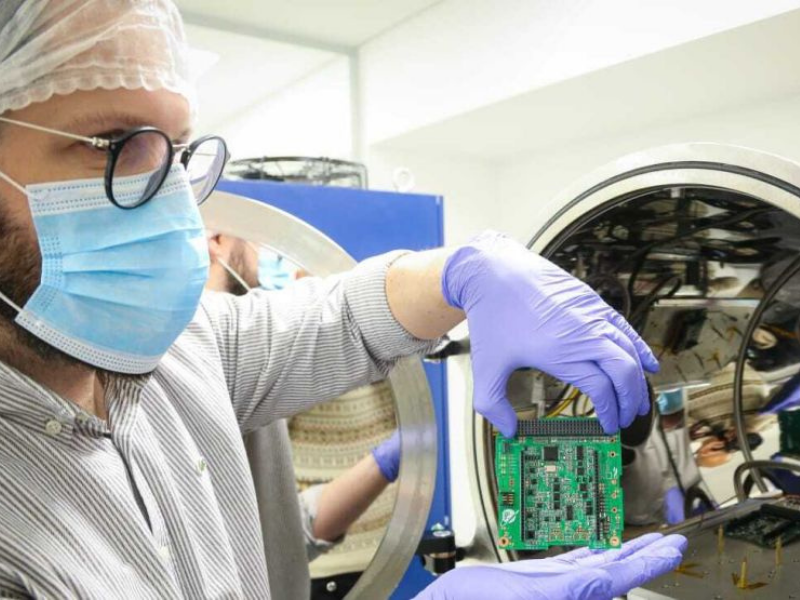
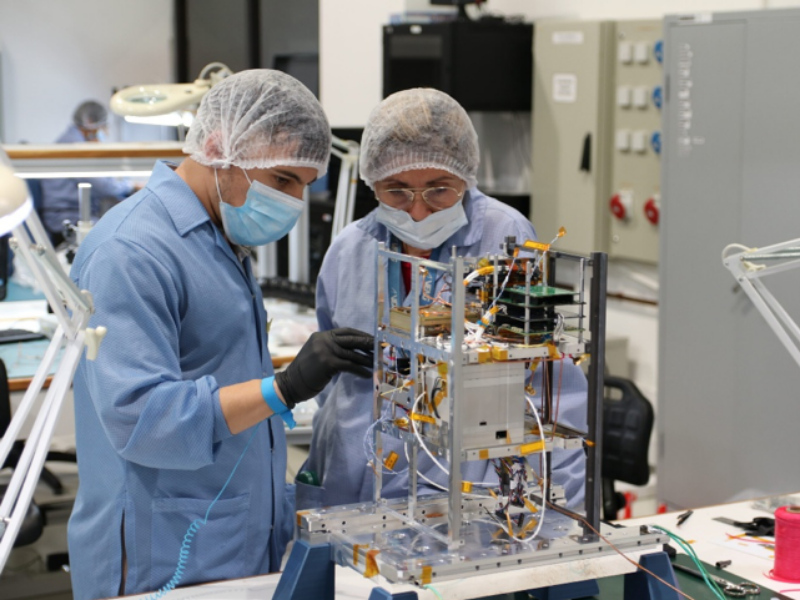
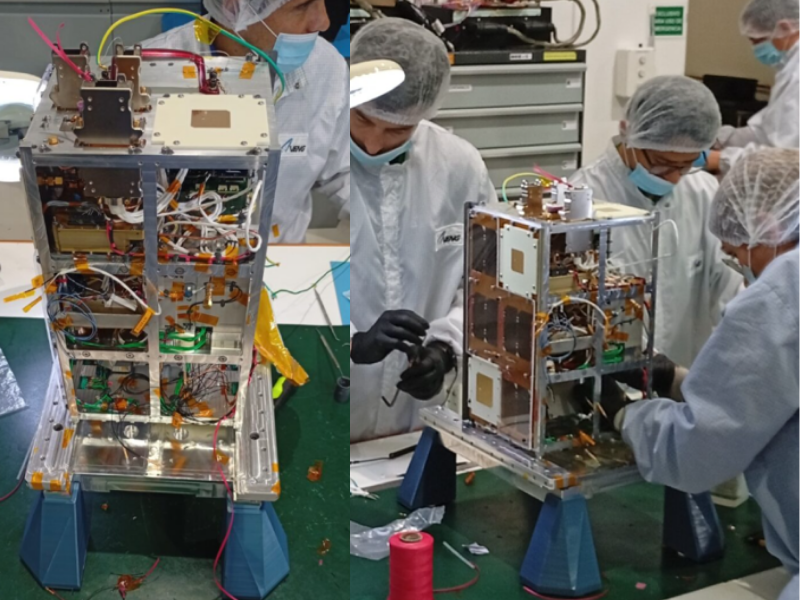
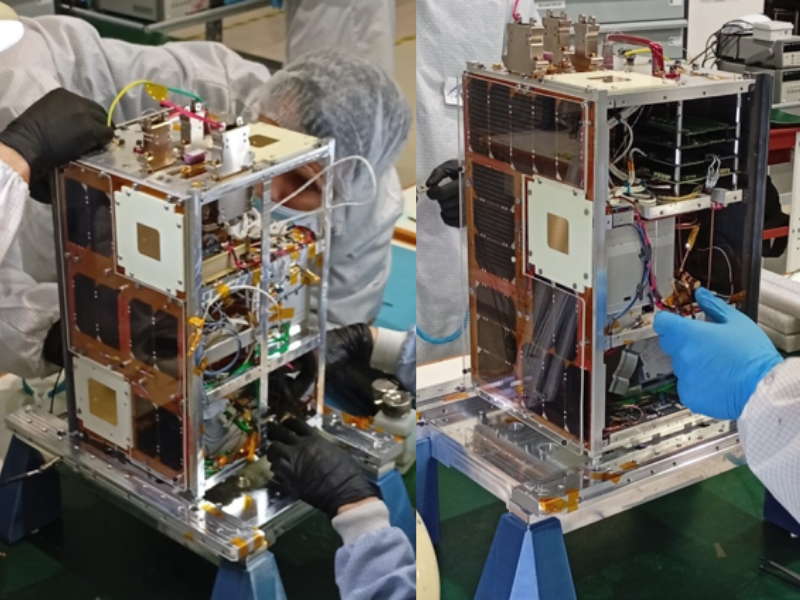
Building ATENEA: from Concept to Integration

Scroll hacia arriba